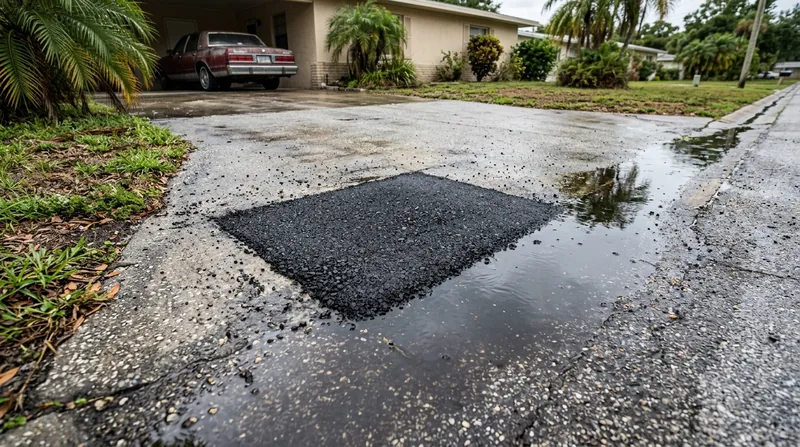




Pothole Repair & Asphalt Patching in Sarasota is one of the most common calls we get from March through October, when the combination of heat, heavy rain, and flat terrain creates the perfect conditions for potholes to form. Sarasota's sandy soil drains quickly at the surface but sits on shell and limestone with a high water table underneath. After a thunderstorm, standing water sits in low spots on driveways and parking lots, softening the base and weakening the asphalt above. Once the sun hits and the asphalt dries, it cracks and breaks apart. A pothole that starts small can grow fast, and leaving it unrepaired means water keeps working into the base, making the damage spread. We cut back to sound asphalt, tack the edges, and compact new hot mix so the patch holds through the wet season and beyond.
Why Potholes Form Fast in Sarasota: Drainage, Heat, and Wet Season Pressure
Sarasota's paving failures are almost always rooted in water. The flat topography means that pitch and drainage path matter as much as asphalt thickness. When rain falls on a flat lot, it pools rather than runs off, and if the base underneath is not properly compacted or sloped, that water stays trapped. The summer rainy season pushes moisture up from below, softening the base and creating voids under the surface. Heat and traffic then collapse those voids, and the asphalt cracks and breaks. Unlike northern climates where freeze-thaw cycles cause the damage, Sarasota potholes come from moisture, soft base, and the weight of a car in the wrong spot at the wrong time.
- Standing water on flat lots after a thunderstorm weakens the base layer and creates soft spots under the asphalt surface.
- Sandy soil drains fast at the surface but holds moisture deeper, and the high water table means drainage must be engineered into the drive itself.
- Hot sun and traffic combine to collapse voids in the base, breaking the asphalt above and opening a pothole that spreads if left unrepaired.
- A small crack or soft spot becomes a pothole within weeks once water and traffic begin to work on it.
Catching potholes early and patching them properly stops the spread and buys time before a full resurfacing becomes necessary.
Key info: In neighborhoods like Lakewood Ranch, Palmer Ranch, and the newer gated subdivisions spreading toward Venice, long HOA roads sit on the same sandy base. A pothole in a private road affects the whole community, and the HOA rules often require quick repair. We handle both residential driveways and HOA roads across Greater Sarasota.
For more detail on how water and base failure work together, see our page on driveway repair, which covers the full range of damage from soft spots to deep breaks.
How We Repair Potholes and Patches in Sarasota: The Right Way
The difference between a patch that holds for years and one that fails in months comes down to preparation. We do not simply throw new asphalt into a hole and call it done. We cut back to sound asphalt, remove all loose material, tack the edges with a bonding agent, and then compact new hot mix in layers so it bonds to the surrounding pavement and does not shift or crack. The patch must be slightly crowned so water sheds off, and the edges must be sealed so water does not creep underneath. A proper patch on a driveway or parking lot in Sarasota will hold through the wet season and beyond, because we build it to shed water and stand up to heat and traffic.
- We cut the damaged area back to sound asphalt, removing all soft or crumbling material so the new patch has a solid foundation.
- We clean the cut edges and apply a tack coat, a sticky bonding agent that helps the new asphalt stick to the old.
- We place new hot mix asphalt in the hole and compact it with a plate compactor in multiple passes to achieve proper density.
- We crown the patch slightly so water runs off rather than pooling, and we verify that it is flush with the surrounding pavement.
The result is a patch that does not rut, crack, or separate from the surrounding asphalt, and that keeps water from creeping underneath and spreading the damage.
Example: A residential driveway in Siesta Key developed a pothole near the garage after a heavy summer rain pooled in a low spot. We cut the hole back, removed the soft base material, compacted new crushed stone as a base, and patched it with hot mix. The patch has held for over two years because the base is now solid and the drainage is correct. The homeowner did not need a full resurface.
If you have multiple patches, or if the patches are covering more than thirty to forty percent of the surface, a full asphalt resurfacing is often the smarter investment than patching piecemeal.
Pothole Repair Methods: When to Patch, When to Resurface
| Approach | Description | Best for |
|---|---|---|
| Full-Depth Pothole Patch | Cut back to sound asphalt, remove soft base, compact new base stone, and place hot mix in layers with proper tack and crown. | Single or isolated potholes on otherwise sound driveways or parking lots. |
| Skin Patch | Surface patch when the pothole is shallow and the base is still solid. We clean, tack, and place hot mix without removing base material. | Small surface breaks or cracks that have not penetrated to the base. |
| Multiple Patches / Alligator Cracking | When potholes or cracks cover more than thirty to forty percent of the surface, patching becomes uneconomical. A full resurfacing or overlay is the better choice. | Driveways or parking lots with widespread damage or extensive alligator cracking that signals base failure. |
| Emergency Pothole Repair | Quick-set temporary patch to make a parking lot or driveway passable until permanent repair can be scheduled. Longer-term solution follows. | Parking lots where downtime costs money, or driveways that are unsafe or impassable. |
Pothole Repair & Asphalt Patching Cost in Sarasota: What to Expect
The cost of pothole repair and asphalt patching in Sarasota starts at around $450 for a single isolated pothole on a residential driveway, including material, labor, and proper compaction. The final price depends on several factors: the size and depth of the pothole, whether the base underneath is still solid or soft and requires removal and replacement, the location and accessibility of the damage, and whether the surrounding asphalt is in good enough condition to bond a patch to. A small surface crack patched on a parking lot costs less than a full-depth pothole that requires base work. If you have multiple potholes scattered across the surface, or if the asphalt is showing extensive alligator cracking, the cost-per-repair goes up because the real problem is the base or the age of the surface itself, and patching becomes a losing proposition.
We include a written estimate that specifies the size of the area, the depth of the cut, the tonnage of new asphalt, and the labor. We do not charge a fee for the estimate, and there is no obligation to book. For a detailed breakdown of pricing across all our services, visit our pricing page.
The best way to know your cost is to get two or three estimates from local contractors who will measure the damage and give you a written number. That also lets you compare approach: some contractors will want to patch, others will recommend resurfacing, and you want to hear both sides before you decide. Call us at (941) 259-1203 for a free estimate.
Pothole Repair & Asphalt Patching Near Me: What Sarasota Homeowners Should Know When Hiring
Hiring a contractor for pothole repair or asphalt patching is straightforward if you know what to look for. First, verify that the contractor is fully insured and can provide a certificate of insurance. In Florida, licensing and permit requirements for residential driveway paving vary by county and city, so confirm with your local building department whether a permit is required for your repair and what credentials the contractor must hold. Second, get a written estimate that includes the size of the area, the depth of the repair, the tonnage of material, and the price. Third, check references from recent jobs in your area, and ask how long the patch is expected to hold. Fourth, if your property is in an HOA community, check the architectural standards for material and color before you start work. Finally, be wary of unsolicited door-to-door offers, cash-only deals, or prices that seem too good to be true. The honest paving contractor will come to your house, measure the damage, give you a written estimate, and explain what is causing the problem and how long the repair will last.
We have been serving Sarasota, Bradenton, Venice, and the surrounding area since 2015. We provide free estimates with written specifications and tonnage, and we are happy to discuss whether a patch will solve your problem or whether a larger repair or resurfacing makes more sense. Call us at (941) 259-1203 to schedule a free estimate with no obligation.
Pothole Repair & Asphalt Patching in Sarasota: Pricing Guide
| Service | Price | Details |
|---|---|---|
| Single pothole patch | Starting at $450 | Full-depth patch including base work, proper compaction, and tack coat for one isolated pothole on residential driveway |
| Multiple patches or small area repair | Starting at $800 | Two to four potholes or cracks on same driveway or parking lot, with proper preparation and bonding of each patch |
| Parking lot pothole repair | Starting at $650 | Full-depth patch on commercial or HOA parking lot, including traffic control and same-day completion when possible |
| Extensive damage or widespread patching | On estimate | When damage covers more than thirty to forty percent of surface, resurfacing is more cost-effective than multiple patches |
| Travel and estimate | Free estimate, included travel | No charge for on-site measurement and written estimate in Sarasota and surrounding service areas, no mileage or call-out fee |
Indicative pricing, the exact cost depends on square footage, finish, and site access. Free personalized estimate within 24h at (941) 259-1203.


